
by @saidonescottishlady
Three Films About Dissent — At Very Different Scales
I’ve recently seen three films that sit in completely different cinematic worlds, yet are preoccupied with the same thing: dissent. One Battle After Another (dir. Paul Thomas Anderson), The Secret Agent (dir. Kleber Mendonça Filho), and It Was Just an Accident (dir. Jafar Panahi) vary wildly in budget, geography and production risk. But all three are about what happens when individuals push back against systems that appear immovable
Note: Click the pics to go thought to the trailers for each film.
One Battle After Another
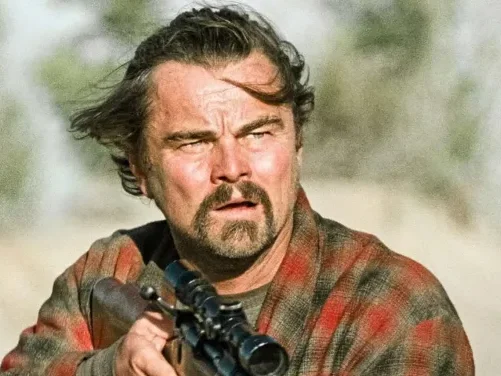
Paul Thomas Anderson’s film is the most obviously “big”. It has scale, gloss and serious awards momentum. Leonardo DiCaprio plays Bob Ferguson, a former radical who has retreated from public life to raise his daughter quietly. That quiet is shattered when she is abducted by forces tied to his past activism. Bob is dragged back into confrontation with Colonel Steven J. Lockjaw (Sean Penn), a military figure whose pursuit feels both ideological and personal. The plot moves between action and satire, but what interested me more was the generational tension. Bob isn’t a fresh-faced revolutionary; he’s tired, wary and compromised. The film isn’t romantic about activism. It shows how movements fracture, how strategy becomes muddied, and how the state adapts just as quickly as its opponents. Sean Penn’s performance deserves the attention it’s getting. He plays Lockjaw with discipline rather than bluster. There’s something unsettling about how measured he is — he believes in the system he represents. For all its scale, the film is really about longevity. What does it mean to keep fighting? And what does it cost over time? It’s polished, occasionally sprawling, but serious in its intent.
The Secret Agent
If Anderson works in widescreen, Kleber Mendonça Filho works in atmosphere. The Secret Agent is set in Brazil in 1977 under the military dictatorship. Wagner Moura (he of Narcos fame) plays Marcelo, a technology specialist who arrives in Recife hoping for relative stability, only to find himself navigating surveillance and quiet repression. This is not a film of explosions or grand speeches. It’s about coded communication. Characters refer to inanimate objects — most memorably a “hairy leg” — when discussing dangerous acts. Language becomes camouflage. You understand that direct speech could be fatal. The dictatorship rarely appears in obvious form. It’s there in paperwork, in suspicion, in who is listening. Marcelo is not an obvious hero; he’s an ordinary man trying to judge when to speak and when to stay silent. What’s impressive is the restraint. The film doesn’t overplay its hand. It trusts the audience to read the subtext. Resistance here is incremental, cultural, embedded in everyday exchanges. It feels specific to Brazil and that period, rather than generically “political”.
It Was Just An Accident
It Was Just an Accident Panahi’s film is the most intimate — and arguably the most daring. Made covertly in Iran, it begins with something almost banal: a minor car accident. Vahid, a mechanic, becomes convinced the driver he helps may be the prison torturer who once abused him. The problem is that he never saw his torturer’s face. Vahid abducts the man and consults former comrades. What follows is not a revenge thriller in the conventional sense but an extended moral debate. Is this the right person? What does justice look like? And if the state cannot be trusted, who gets to decide? The tone is unexpectedly funny at times — dry, awkward, human. That humour makes the ethical questions sharper. The film refuses to give an easy answer. Revenge is tempting. It is also destabilising. Knowing it was filmed and edited in secret inevitably sharpens its impact, but the film stands on its own as a serious exploration of trauma and responsibility in contemporary Iran.
A thread through all three: dissent is personal
These films operate at three different scales. One Battle After Another shows institutional, generational struggle. The Secret Agent shows coded, cultural resistance. It Was Just an Accident turns dissent inward, asking what it means morally. None of them offer neat victory. Movements continue. Codes persist. Questions remain unresolved. What they share is an understanding that dissent is rarely dramatic in the way cinema likes it to be. It’s exhausting, ambiguous and often compromised. Sometimes it’s loud. Sometimes it’s whispered. Sometimes it’s just a conversation about what you’re prepared to do next. And that feels, at the moment, uncomfortably relevant.
My Favourite:
- One Battle After Another is likely to win all the awards but my favourite of the three is It Was Just An Accident. The covert filming and the questions it leaves us with gave me shivers. It is astonishing.
- It’s the BAFTA’s this weekend and Oscars very soon. Next month I’ll do a sweep up of all the big winners.
If you have any feedback on the column, please send it to: saidonescottishlady@me.com